Taiwan’s Silicon Shield: Why the World Depends on One Island
Introduction: The Most Important Island in the Global Economy
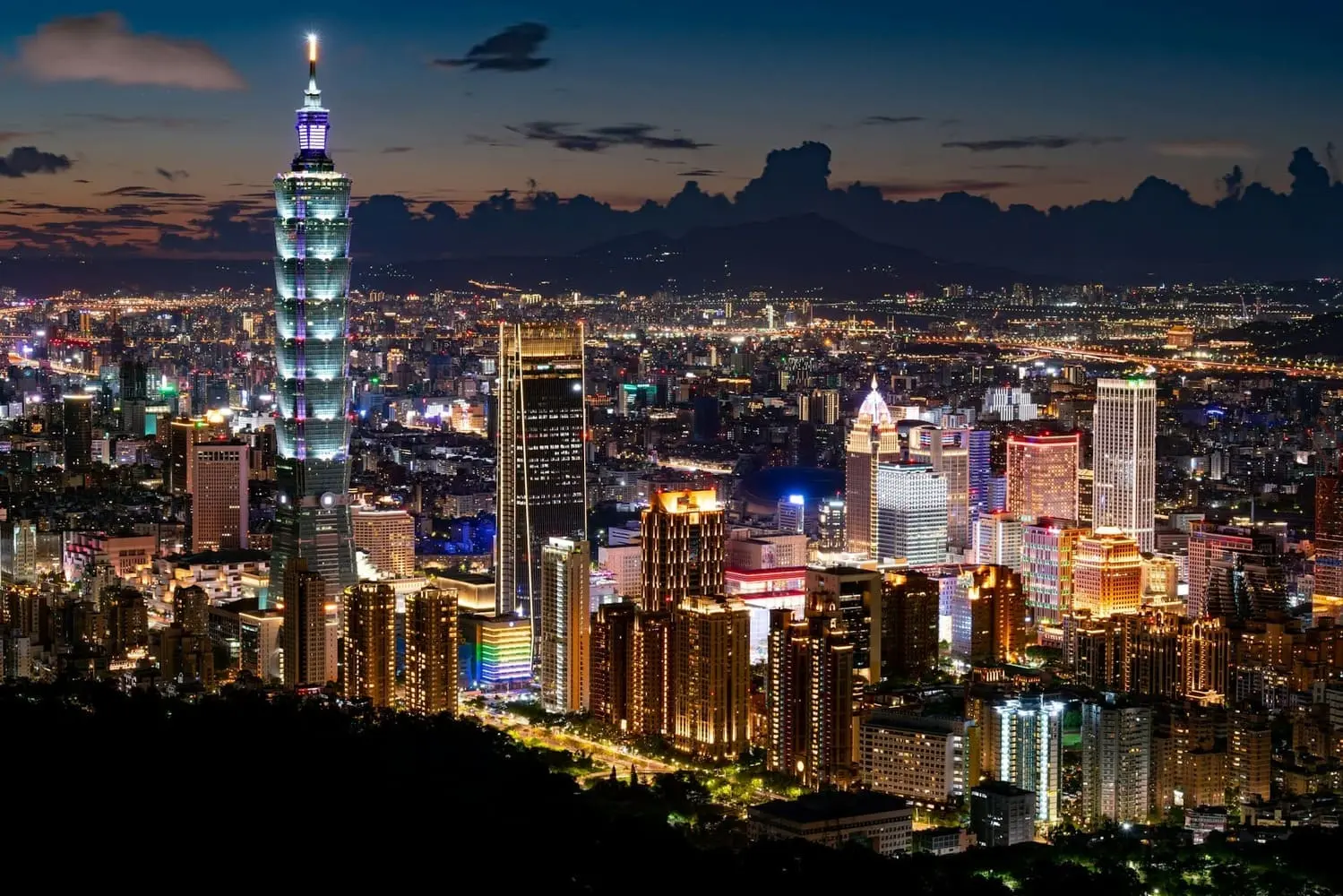
Most people can point to major powers such as the United States, China, or the European Union when discussing the future of the world economy. Yet one of the most strategically important places on Earth is a mountainous island of just 23 million people located off China’s southeastern coast: Taiwan. This tiny nation has built what experts call Taiwan’s Silicon Shield, a massive semiconductor manufacturing industry that makes the entire world dependent on its technology.
Despite its relatively small size, Taiwan sits at the center of the modern technological civilization. Every smartphone, artificial intelligence system, data center, fighter jet, electric vehicle, medical device, and advanced military platform relies on semiconductors. And Taiwan produces the vast majority of the world’s most advanced chips.
This extraordinary concentration of technological capability has given rise to a concept widely known as the “Silicon Shield”—the idea that Taiwan’s central role in the global semiconductor industry provides a form of strategic protection because any major disruption to Taiwan would trigger severe economic consequences for the entire world.
As geopolitical tensions rise in East Asia and competition between the United States and China intensifies, Taiwan’s Silicon Shield has become one of the most consequential factors shaping global security, economic stability, and technological progress.
This article examines how Taiwan built its semiconductor dominance, why the world depends on it, the vulnerabilities of the Silicon Shield, and what the future may hold for the island at the heart of the digital age.
Understanding the Silicon Shield
The term “Silicon Shield” refers to Taiwan’s unique geopolitical leverage derived from its dominance in semiconductor manufacturing.
Unlike traditional military deterrence, the Silicon Shield is based on economic interdependence. The logic is straightforward:
- The world needs advanced chips.
- Taiwan manufactures most of those chips.
- A disruption to Taiwan would severely damage the global economy.
- Therefore, major powers have strong incentives to prevent instability in Taiwan.
This creates a strategic reality in which Taiwan is not merely a regional issue but a critical node in the global economic system.
The Silicon Shield has transformed Taiwan from a regional manufacturing hub into one of the world’s most important strategic assets.
Why Semiconductors Matter More Than Oil
During the 20th century, oil was often described as the lifeblood of industrial civilization.
In the 21st century, semiconductors occupy a similar position.
Modern chips power:
- Smartphones
- Artificial Intelligence systems
- Cloud computing infrastructure
- Military equipment
- Satellites
- Telecommunications networks
- Electric vehicles
- Medical technologies
- Industrial automation
- Consumer electronics
Without semiconductors, the digital economy would cease to function.
The semiconductor supply chain is extraordinarily complex, involving thousands of suppliers across dozens of countries. Yet the most advanced stage—manufacturing cutting-edge chips—is concentrated in Taiwan to an unprecedented degree.
The Rise of Taiwan’s Semiconductor Industry
Taiwan’s semiconductor success was not inevitable.
In the 1970s and 1980s, Taiwan pursued a deliberate strategy of technological development supported by government investment, research institutions, and international partnerships.
A key milestone was the creation of the Industrial Technology Research Institute (ITRI), which helped transfer advanced semiconductor knowledge to Taiwanese companies.
The breakthrough came in 1987 with the founding of Taiwan Semiconductor Manufacturing Company (TSMC) by Morris Chang.
Rather than competing directly with firms designing chips, TSMC pioneered the “foundry model,” manufacturing chips for other companies.
This innovation transformed the industry.
Companies such as:
- Apple
- NVIDIA
- AMD
- Qualcomm
- Broadcom
- MediaTek
could focus on design while outsourcing manufacturing to TSMC.
Over time, TSMC became the world’s most advanced semiconductor manufacturer.
Today, the company represents one of the greatest industrial success stories in modern history.
TSMC: The Crown Jewel of the Global Technology Industry
No discussion of Taiwan’s Silicon Shield is complete without understanding TSMC.
TSMC manufactures chips for many of the world’s leading technology firms.
Its capabilities are particularly significant in advanced process nodes, where transistor sizes are measured in nanometers.
Producing these chips requires:
- Extreme precision engineering
- Massive capital investment
- Specialized equipment
- Advanced materials science
- Highly skilled talent
Building a cutting-edge fabrication plant can cost tens of billions of dollars.
The technological barriers are so high that only a handful of companies globally can compete at the frontier.
TSMC’s lead is the result of decades of accumulated expertise, making it exceptionally difficult for competitors to replicate.
The AI Revolution Depends on Taiwan
Artificial Intelligence has become one of the defining technologies of the modern era.
From large language models to autonomous systems, AI requires immense computational power.
That power comes from advanced semiconductors.
Companies developing AI systems rely heavily on high-performance chips designed by firms such as NVIDIA and AMD.
Many of these chips are manufactured in Taiwan.
As AI adoption accelerates, demand for advanced semiconductors continues to grow.
This has elevated Taiwan’s strategic importance even further.
In many respects, Taiwan has become the physical foundation upon which the AI revolution is being built.
Why China Views Taiwan as Strategically Critical
Taiwan’s importance extends far beyond semiconductors.
For Beijing, Taiwan occupies a central place in national identity, historical narratives, and security considerations.
The Chinese government views Taiwan as part of China and has consistently stated its objective of eventual reunification.
At the same time, Taiwan operates as a self-governing democracy with its own political system, military, and economy.
This creates one of the most sensitive geopolitical flashpoints in the world.
Semiconductor dominance adds another dimension to the issue.
Control over the world’s most advanced chip manufacturing ecosystem would carry enormous economic and strategic implications.
As technology increasingly shapes national power, semiconductor leadership has become a major factor in great-power competition.
The United States and Taiwan’s Strategic Importance
The United States views Taiwan through multiple lenses:
Economic Lens
American technology companies depend heavily on Taiwanese semiconductor manufacturing.
Security Lens
Taiwan occupies a strategically important position within the Western Pacific.
Technological Lens
Maintaining access to advanced semiconductors is essential for American innovation and competitiveness.
As a result, Taiwan has become a central component of U.S. strategy in the Indo-Pacific region.
Washington has also increased efforts to diversify semiconductor production through initiatives such as the CHIPS and Science Act, aiming to reduce supply-chain vulnerabilities.
However, building alternative manufacturing capacity takes years and cannot easily replace Taiwan’s existing ecosystem.
What Happens If Taiwan’s Chip Production Stops?
One of the most important questions in global economics is surprisingly simple:
What happens if Taiwan’s semiconductor production is disrupted?
The answer is alarming.
Potential consequences include:
Technology Sector Shock
Major technology firms could face severe shortages of advanced chips.
AI Development Slowdown
Training advanced AI systems would become significantly more difficult.
Automotive Disruptions
Vehicle production could decline sharply due to semiconductor shortages.
Inflationary Pressures
Reduced supply and increased demand would drive prices higher across multiple industries.
Financial Market Volatility
Investors would likely react strongly to uncertainty in global technology supply chains.
National Security Concerns
Military modernization programs across multiple countries could be affected.
The semiconductor shortages experienced during the COVID-19 pandemic offered a small preview of these risks.
A Taiwan-related disruption would be substantially larger.
Can Other Countries Replace Taiwan?
Many governments have recognized the risks associated with concentrated semiconductor production.
Significant investments are underway in:
- United States
- Japan
- South Korea
- Germany
- India
New fabrication facilities are being built around the world.
Yet replacing Taiwan is far more difficult than constructing factories.
Taiwan possesses:
- Deep engineering expertise
- Highly specialized suppliers
- Advanced manufacturing know-how
- Mature industrial ecosystems
- Decades of accumulated experience
Semiconductor leadership is not simply a matter of spending money.
It is the result of an ecosystem developed over generations.
Even optimistic projections suggest that Taiwan will remain indispensable to advanced chip manufacturing for many years.
Is the Silicon Shield Strong Enough?
The Silicon Shield is often presented as a powerful deterrent, but it is not invulnerable.
Critics argue that economic interdependence does not always prevent conflict.
History provides numerous examples where strategic objectives outweighed economic costs.
Several factors could weaken the Silicon Shield:
- Rising geopolitical tensions
- Technological decoupling
- Supply-chain diversification
- National security competition
- Domestic political pressures
Others argue that Taiwan’s semiconductor dominance actually increases strategic risks by making the island more important in geopolitical rivalries.
The reality is likely somewhere between these perspectives.
The Silicon Shield provides substantial leverage, but it is not an absolute guarantee of security.
The Future of the Semiconductor Cold War
Many analysts now describe the competition between the United States and China as a new technological cold war.
Unlike the Cold War of the twentieth century, today’s rivalry centers on:
- Artificial Intelligence
- Semiconductor manufacturing
- Quantum computing
- Advanced telecommunications
- Cybersecurity
- Strategic technologies
Semiconductors sit at the center of this competition.
The country or coalition that controls critical semiconductor technologies will possess significant economic and strategic advantages.
Taiwan therefore occupies a uniquely important position in the emerging global order.
Its future will influence not only regional stability but also the trajectory of technological development worldwide.
Conclusion: The Island That Powers the Modern World
Taiwan’s Silicon Shield represents one of the most remarkable intersections of technology, economics, and geopolitics in modern history.
An island that many people could barely locate on a map has become essential to the functioning of the global economy.
Every smartphone, cloud service, AI model, advanced weapon system, and digital platform depends in some way on the semiconductor ecosystem that Taiwan helped create.
The world’s reliance on Taiwan reveals a broader truth about the 21st century: power is increasingly determined not only by military strength or natural resources, but by control of critical technologies.
As geopolitical competition intensifies and demand for advanced computing grows, Taiwan’s importance is likely to increase rather than diminish.
The Silicon Shield may not guarantee peace, but it has undeniably made Taiwan one of the most strategically significant places on Earth.
In an age defined by technology, the future of the world may depend more on this small island than most people realize.
References
- Taiwan Semiconductor Manufacturing Company (TSMC) Annual Reports
https://www.tsmc.com - Semiconductor Industry Association (SIA)
https://www.semiconductors.org - U.S. CHIPS and Science Act Documentation
https://www.congress.gov - Center for Strategic and International Studies (CSIS) Semiconductor Research
https://www.csis.org - International Monetary Fund (IMF) Analysis on Taiwan and Global Supply Chains
https://www.imf.org - Brookings Institution Research on Taiwan and U.S.-China Relations
https://www.brookings.edu - Council on Foreign Relations (CFR) – Taiwan and Global Security
https://www.cfr.org - World Economic Forum – Semiconductor Supply Chain Reports
https://www.weforum.org - Organisation for Economic Co-operation and Development (OECD) Technology Studies
https://www.oecd.org - Industrial Technology Research Institute (ITRI) Taiwan
https://www.itri.org.tw