The Hidden Empire Behind the World’s Most Powerful Data Centers
Introduction
Every email sent, video streamed, AI query processed, online purchase completed, and financial transaction executed depends on one invisible foundation: data centers.
While satellites, smartphones, and artificial intelligence often dominate technology headlines, data centers are the physical infrastructure powering the digital world. They store the world’s information, process internet traffic, train AI models, support cloud computing, and enable global communication.
As the global economy becomes increasingly digital, a critical question emerges:
Who actually controls the world’s data centers?
The answer reveals a fascinating intersection of technology, economics, geopolitics, national security, and corporate power.
The organizations controlling data centers today are not merely technology companies. They are becoming the custodians of global information and the architects of the digital future.
What Is a Data Center?
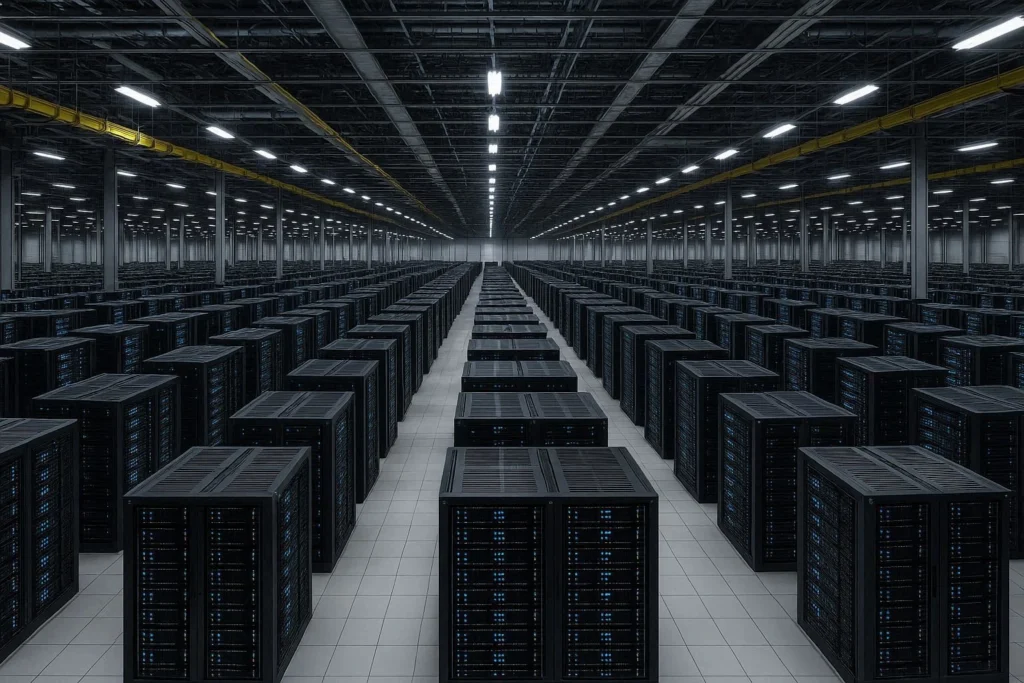
A data center is a specialized facility that houses servers, networking equipment, storage systems, and computing infrastructure.
These facilities provide:
- Cloud computing services
- Artificial intelligence processing
- Data storage
- Internet traffic routing
- Financial transaction processing
- Government digital services
- Enterprise software hosting
Without data centers, modern civilization would effectively stop functioning.
Every Google search, Netflix stream, WhatsApp message, online bank transfer, and AI interaction depends on data centers operating continuously around the clock.
Why Data Centers Have Become Strategic Assets
Historically, nations competed for control of:
- Oil fields
- Shipping routes
- Industrial capacity
- Natural resources
Today, a new strategic resource has emerged:
Computing power.
Data centers now represent:
- Economic influence
- Technological dominance
- National security capability
- Artificial intelligence leadership
- Digital sovereignty
Countries increasingly view large-scale computing infrastructure as critical national assets.
This shift mirrors broader technological competition discussed in our analysis of the Future of the Semiconductor Industry and the US–China Tech Competition.
The Companies That Control Most Global Data Centers
1. Amazon Web Services (AWS)
Amazon operates the world’s largest cloud infrastructure platform.
AWS powers:
- Governments
- Startups
- Banks
- Healthcare systems
- Fortune 500 companies
Its massive global network spans dozens of regions and hundreds of facilities worldwide.
Official Website: https://aws.amazon.com/
2. Microsoft Azure
Microsoft has become one of the fastest-growing cloud providers.
Azure hosts:
- Enterprise applications
- Government systems
- AI workloads
- Business infrastructure
The company’s investment in AI and cloud computing continues to expand its global data center footprint.
Official Website: https://azure.microsoft.com/
3. Google Cloud
Google’s infrastructure powers:
- Search
- YouTube
- Gmail
- Maps
- AI systems
The company operates some of the most advanced and efficient data centers on Earth.
Official Website: https://cloud.google.com/
4. Meta
Meta operates enormous facilities supporting:
- Threads
Its infrastructure serves billions of users daily and processes extraordinary amounts of data.
Official Website: https://about.meta.com/
5. Alibaba Cloud
China’s cloud giant dominates significant portions of Asia’s digital infrastructure.
Alibaba Cloud plays a crucial role in:
- E-commerce
- Artificial intelligence
- Government services
- Enterprise cloud adoption
Official Website: https://www.alibabacloud.com/
The Rise of Data Center Real Estate Giants
Interestingly, many data centers are not owned by technology companies.
Instead, specialized infrastructure firms own and lease facilities to cloud providers.
Major players include:
Equinix
One of the world’s largest data center operators.
Official Website: https://www.equinix.com/
Digital Realty
A global leader in data center real estate.
Official Website: https://www.digitalrealty.com/
CyrusOne
Major operator focused on hyperscale infrastructure.
Official Website: https://cyrusone.com/
Iron Mountain Data Centers
Expanding from document storage into digital infrastructure.
Official Website: https://www.ironmountain.com/
These firms function as the landlords of the digital economy.
The Geography of Global Data Centers
United States
The United States remains the global leader in data center capacity.
Major hubs include:
- Northern Virginia
- Dallas
- Phoenix
- Silicon Valley
- Chicago
Northern Virginia alone handles a significant share of global internet traffic.
China
China has rapidly expanded domestic data center infrastructure.
Government support has accelerated investments in:
- AI computing
- Cloud services
- Industrial digitalization
China increasingly seeks technological self-sufficiency amid geopolitical competition.
Europe
Europe focuses heavily on:
- Data protection
- Digital sovereignty
- Energy-efficient infrastructure
Countries such as:
- Germany
- Ireland
- Netherlands
- France
have become major data center hubs.
Middle East
Countries including:
- Saudi Arabia
- United Arab Emirates
- Qatar
are investing heavily in digital infrastructure as part of economic diversification strategies.
Artificial Intelligence Is Transforming the Industry
The AI revolution has dramatically increased demand for data centers.
Training advanced AI systems requires:
- Massive computing clusters
- Thousands of GPUs
- High-speed networking
- Huge energy supplies
Modern AI facilities consume vastly more power than traditional data centers.
Companies such as:
- NVIDIA
- Microsoft
- Amazon
- OpenAI
are investing billions of dollars in AI infrastructure.
This trend could reshape global technology leadership over the next decade:
AI and the Global Power Shift: How Artificial Intelligence Is Redefining World Leadership
Energy: The Biggest Constraint
Data centers consume enormous amounts of electricity.
Key challenges include:
- Rising power demand
- Grid capacity limitations
- Sustainability concerns
- Carbon emissions
Many operators are investing in:
- Solar energy
- Wind energy
- Battery storage
- Nuclear power partnerships
Future competition may increasingly depend not only on computing capacity but also on access to affordable energy.
Data Centers and National Security
Governments increasingly view data centers as strategic infrastructure.
Potential risks include:
- Cyberattacks
- Espionage
- Supply chain disruptions
- Foreign influence
As geopolitical competition intensifies, countries are seeking greater control over where data is stored and processed.
The result is growing interest in:
- Data localization laws
- Sovereign cloud systems
- Domestic AI infrastructure
- National cybersecurity strategies
Could Data Centers Become the New Oil Fields?
The 20th century was shaped by control over energy resources.
The 21st century may be shaped by control over:
- Data
- Computing power
- Artificial intelligence infrastructure
Just as oil powered industrial economies, data centers power digital economies.
Nations and corporations that control the largest, most efficient, and most secure computing infrastructure may gain significant economic and geopolitical advantages.
The global race for digital dominance is increasingly a race for data center capacity.
Conclusion
The world’s data centers are controlled by a relatively small group of technology giants, cloud providers, and infrastructure companies.
Amazon, Microsoft, Google, Meta, Alibaba, Equinix, and Digital Realty collectively influence a substantial portion of global digital activity.
Yet the importance of data centers extends far beyond technology.
They are becoming strategic assets that shape economic growth, artificial intelligence development, national security, and geopolitical power.
As the world enters an era defined by AI, cloud computing, and digital transformation, understanding who controls the world’s data centers is essential to understanding who may influence the future of the global economy itself.
References
International Energy Agency (IEA) https://www.iea.org/
Amazon Web Services https://aws.amazon.com/
Microsoft Azure https://azure.microsoft.com/
Google Cloud https://cloud.google.com/
Equinix https://www.equinix.com/
Digital Realty https://www.digitalrealty.com/
Uptime Institute https://uptimeinstitute.com/
Statista https://www.statista.com/