
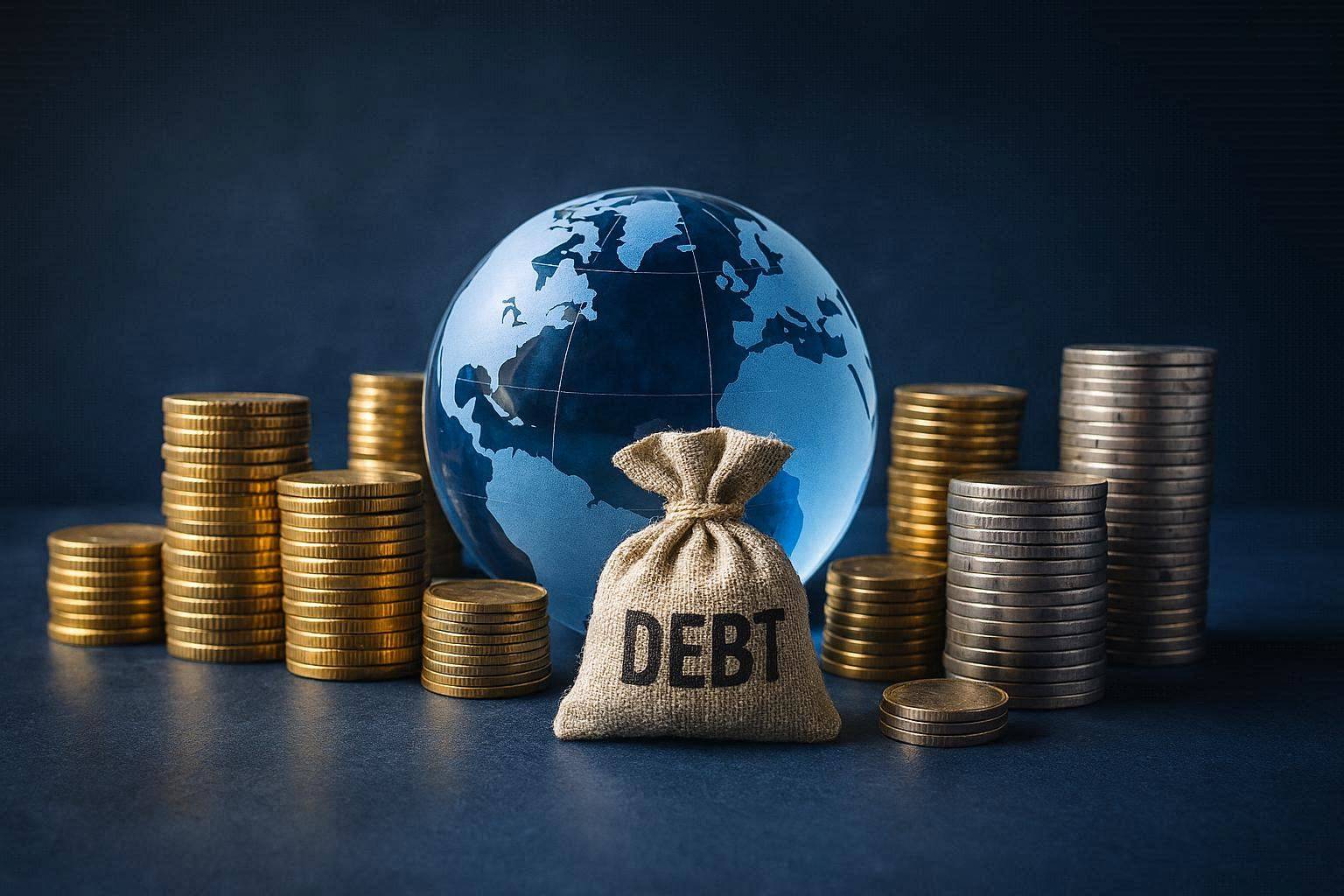
The World’s Most Indebted Countries and What Happens Next?

Introduction
Debt has become one of the defining economic challenges of the 21st century. Governments around the world borrowed heavily during the COVID-19 pandemic to support businesses, households, and healthcare systems. While these measures prevented economic collapse, they also pushed global debt to historic levels.
Today, rising interest rates, slowing economic growth, geopolitical tensions, and aging populations are creating a dangerous combination that threatens the financial stability of many nations. Economists increasingly warn that the next major global crisis may not originate from banks or housing markets—but from sovereign debt itself.
As countries struggle to refinance trillions of dollars in obligations, a critical question emerges:
Which countries are most at risk of a debt crisis, and what would the consequences mean for the global economy?
Understanding the Global Debt Crisis
A debt crisis occurs when a government can no longer comfortably repay its loans or refinance existing debt. This often leads to:
- Currency collapse
- Inflation surges
- Economic recession
- Capital flight
- Social unrest
- International bailouts
According to the International Monetary Fund (IMF), global debt exceeds $300 trillion when combining government, corporate, and household debt.
Several factors are making debt burdens increasingly difficult to manage:
1. Rising Interest Rates
After years of cheap money, central banks raised interest rates aggressively to combat inflation.
Higher rates mean:
- More expensive borrowing
- Increased debt-servicing costs
- Reduced government spending flexibility
Countries that borrowed heavily during the low-rate era now face significantly higher refinancing costs.
2. Slowing Economic Growth
Economic growth is essential because it increases tax revenue and improves a country’s ability to repay debt.
However, many economies are facing:
- Weak productivity growth
- Aging populations
- Trade disruptions
- Geopolitical uncertainty
Without strong growth, debt burdens become harder to sustain.
3. Strong U.S. Dollar
Many developing nations borrow in U.S. dollars.
When the dollar strengthens:
- Debt repayments become more expensive
- Foreign reserves decline
- Currency pressures increase
This has become a major risk across emerging markets.
Countries Facing the Highest Debt Risks
1. Japan
Debt-to-GDP Ratio: Over 250%
Japan possesses the highest government debt burden among major economies.
Why It Is Vulnerable
- Massive public debt
- Aging population
- Declining workforce
- Slow economic growth
For years, Japan managed its debt because interest rates remained near zero.
However, if rates rise significantly, debt servicing costs could increase dramatically.
Why Markets Remain Calm
Most Japanese debt is owned domestically, reducing the risk of sudden foreign investor panic.
Nevertheless, Japan remains one of the world’s most indebted nations.
2. Italy
Debt-to-GDP Ratio: Around 140%
Italy represents one of Europe’s largest debt concerns.
Challenges include:
- Weak economic growth
- Aging demographics
- Political instability
- Large refinancing needs
As a member of the Eurozone, Italy cannot independently print currency to manage debt pressures.
A serious Italian debt crisis could threaten the broader European financial system.
3. Argentina
Argentina has become a symbol of chronic sovereign debt instability.
Key Problems
- High inflation
- Currency depreciation
- Repeated defaults
- Low investor confidence
The country has sought multiple IMF rescue packages over the past decades.
Although reforms are underway, Argentina remains highly vulnerable to external shocks.
4. Pakistan
Pakistan faces growing debt concerns due to:
- Low foreign exchange reserves
- Political uncertainty
- Heavy external debt obligations
- Dependence on international assistance
The country narrowly avoided default in recent years through support from international lenders and partner nations.
Without sustained economic reforms, debt sustainability remains uncertain.
5. Egypt
Egypt’s debt burden has risen rapidly over the past decade.
Major risks include:
- High external debt
- Currency pressures
- Rising import costs
- Dependence on tourism revenues
The country’s strategic importance means international institutions are likely to provide support, but financial vulnerabilities remain significant.
6. Sri Lanka
Sri Lanka became a major warning sign for developing economies.
In 2022, the nation experienced:
- Sovereign default
- Severe shortages of fuel and medicine
- Currency collapse
- Political upheaval
The crisis demonstrated how quickly debt problems can evolve into social and political instability.
7. United States
Debt Exceeding $36 Trillion
The United States remains unique because its debt is denominated in dollars—the world’s primary reserve currency.
This provides significant advantages:
- Strong investor demand
- Deep financial markets
- Global reserve currency status
However, concerns continue growing regarding:
- Persistent fiscal deficits
- Rising interest expenses
- Long-term entitlement obligations
While a traditional default remains unlikely, debt sustainability is becoming a major policy challenge.
China’s Debt Challenge
China’s situation differs from many countries.
Government debt appears manageable compared with some advanced economies.
However, broader debt concerns exist in:
- Local governments
- Property developers
- State-owned enterprises
China’s real estate slowdown has exposed structural weaknesses that could impact future growth.
Given China’s role as the world’s second-largest economy, debt problems there could affect global markets.
Emerging Markets Under Pressure
Several emerging economies face elevated risks due to:
- Dollar-denominated debt
- Commodity price volatility
- Political instability
- Limited foreign reserves
Countries often highlighted by analysts include:
- Kenya
- Ghana
- Zambia
- Ethiopia
- Tunisia
- Lebanon
These nations are particularly vulnerable to global financial shocks.
Why Debt Crises Matter Globally
Modern economies are deeply interconnected.
A sovereign debt crisis can trigger:
Financial Market Turmoil
Investors often withdraw capital from multiple countries simultaneously.
Banking Sector Stress
Banks holding government bonds can suffer significant losses.
Currency Volatility
Debt concerns frequently trigger sharp exchange-rate movements.
Reduced Global Growth
Debt crises can suppress investment, trade, and consumer confidence worldwide.
Could a New Global Debt Crisis Be Coming?
Many economists believe the world is entering a period of heightened debt vulnerability.
Warning signs include:
- Record debt levels
- Elevated interest rates
- Geopolitical fragmentation
- Weak productivity growth
- Aging populations
However, a global debt crisis is not inevitable.
Several factors could help stabilize conditions:
- Strong economic growth
- Fiscal reforms
- Lower inflation
- Technological innovation
- Improved debt management
The outcome will depend largely on how governments adapt to a more challenging economic environment.
The Future of Sovereign Debt
The coming decade may redefine how nations manage public finances.
Governments will increasingly face difficult choices between:
- Spending and austerity
- Growth and stability
- National priorities and debt obligations
Countries capable of boosting productivity, attracting investment, and maintaining fiscal discipline are likely to navigate these challenges successfully.
Those unable to adapt may face mounting financial pressures and increased vulnerability to future crises.
Conclusion
The global debt crisis is no longer a distant threat—it is an emerging reality shaping international economics and geopolitics. While debt alone does not guarantee collapse, excessive borrowing combined with weak growth and rising interest rates can create dangerous vulnerabilities.
Countries such as Japan, Italy, Argentina, Pakistan, Egypt, and several emerging economies face particularly significant risks. Even major powers including the United States and China must confront growing long-term debt challenges.
As governments, investors, and citizens navigate an increasingly uncertain financial landscape, sovereign debt may become one of the most important geopolitical and economic stories of the decade.
The question is no longer whether debt matters.
The question is which countries will successfully manage it—and which will become the next cautionary tale.