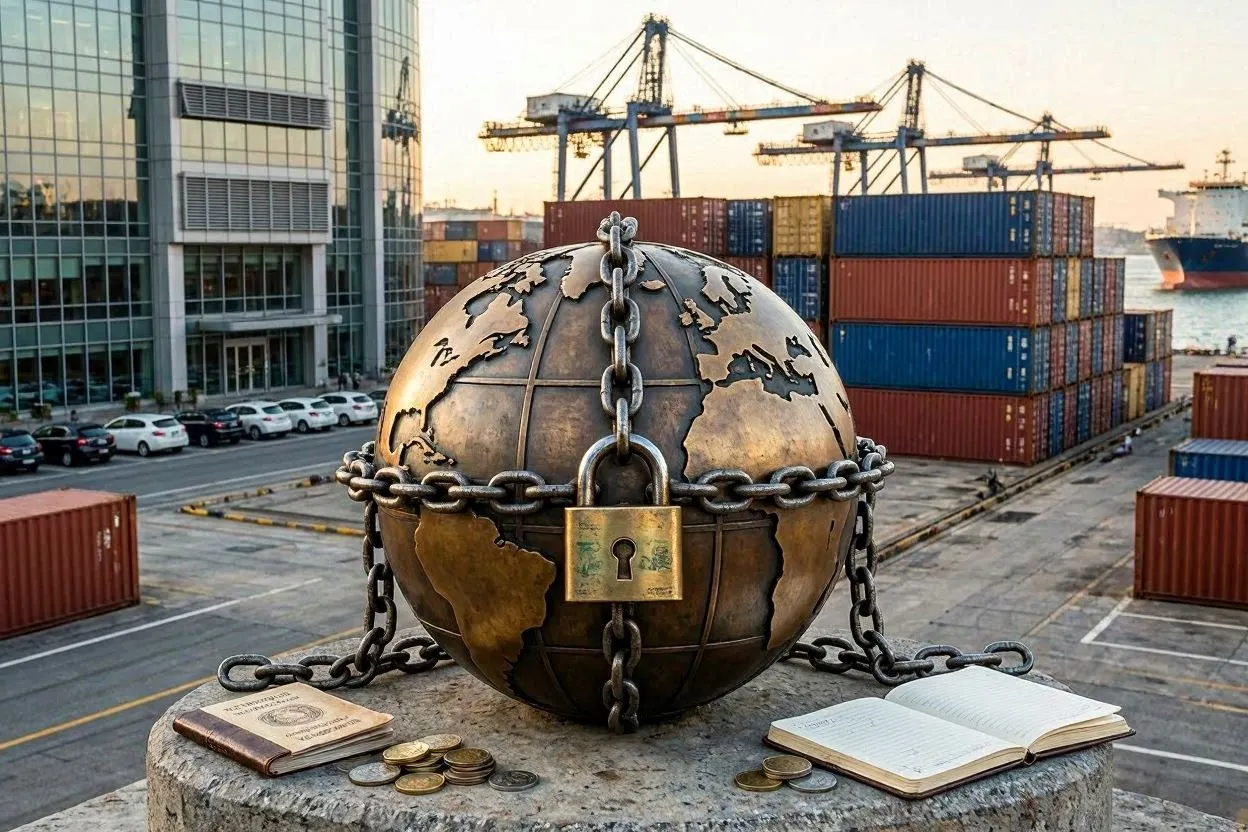
How Economic Sanctions Became One of the Most Powerful Weapons in Global Politics
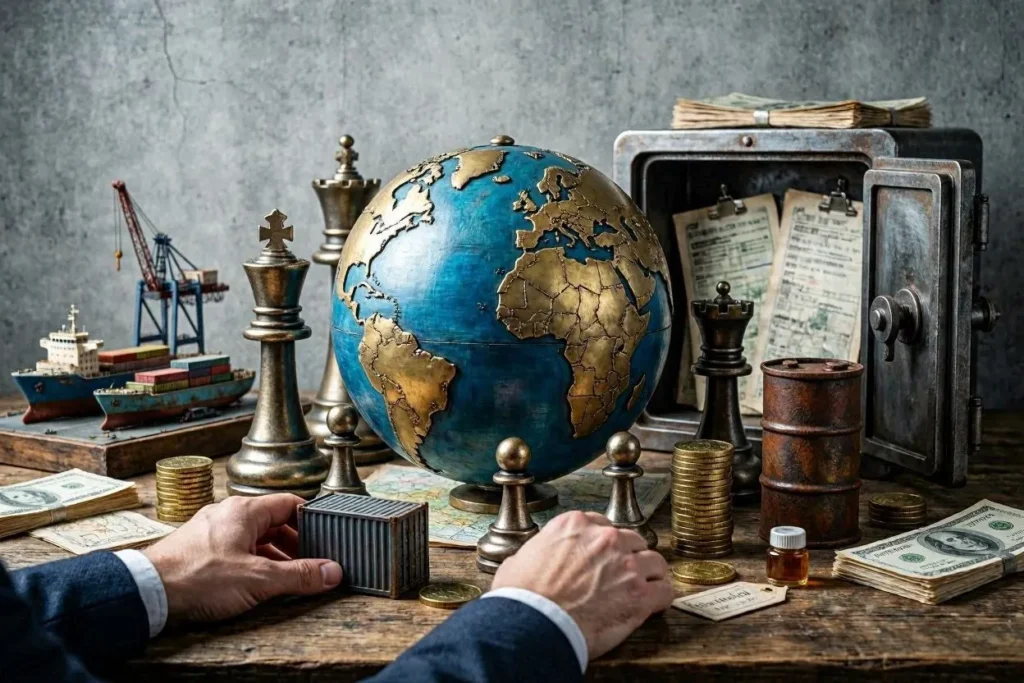
Introduction
In the 21st century, nations increasingly pursue geopolitical objectives without deploying armies or launching missiles. Instead, they often turn to a powerful alternative: economic sanctions.
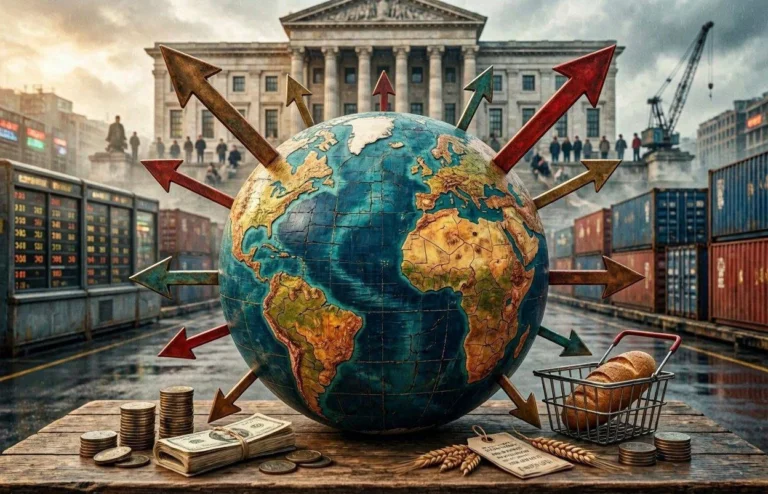
From Russia’s invasion of Ukraine to tensions involving Iran, North Korea, and Venezuela, economic sanctions have emerged as one of the most influential instruments of international power. They can cripple economies, isolate governments, disrupt global trade networks, and reshape strategic decisions across entire regions.
What makes sanctions particularly significant is that they allow states to project power without direct military confrontation. In an era where large-scale wars carry enormous risks and costs, economic pressure has become a preferred weapon for many governments.
But how did sanctions become so powerful? Do they actually work? And what does their growing use reveal about the future of global politics?
The Rise of Economic Warfare
Economic sanctions are restrictions imposed by one country or a group of countries on another nation, organization, or individual to influence behavior.
These measures can include:
- Trade embargoes
- Financial restrictions
- Asset freezes
- Technology export controls
- Investment bans
- Banking sanctions
- Travel restrictions
Historically, economic blockades have existed for centuries. However, modern sanctions became prominent after World War II as nations sought alternatives to military conflict.
The creation of international institutions such as the United Nations encouraged the use of economic pressure as a diplomatic tool. Over time, sanctions evolved from broad trade embargoes into highly sophisticated instruments targeting specific sectors, companies, and political elites.
Today, sanctions are often described as “economic warfare.”
Why Sanctions Have Become So Effective
1. Globalization Created New Vulnerabilities
Modern economies are deeply interconnected.
Countries depend on:
- International banking systems
- Global supply chains
- Foreign investment
- Access to technology
- Energy markets
This interconnectedness creates leverage.
When a nation loses access to critical financial networks or advanced technologies, economic damage can be severe.
The globalized economy has transformed economic interdependence into a geopolitical weapon.
2. The Power of the U.S. Dollar
One of the most important reasons sanctions have become effective is the dominance of the U.S. dollar.
A significant share of global trade, energy transactions, and international finance relies on dollar-based systems.
Because many international payments pass through American financial institutions, the United States possesses extraordinary leverage over global financial flows.
When countries or companies are cut off from dollar transactions, the consequences can be devastating.
This financial influence has become a cornerstone of modern American geopolitical power.
3. Technology Controls Are the New Sanctions Frontier
Modern sanctions increasingly focus on technology rather than traditional trade.
Advanced semiconductors, artificial intelligence infrastructure, quantum computing technologies, and critical software have become strategic assets.
Governments now recognize that denying access to cutting-edge technology can limit a rival’s long-term economic and military capabilities.
The competition for technological supremacy is becoming a central feature of modern geopolitics.
Related Geonucleus Article: AI and the Global Power Shift: How Artificial Intelligence Is Redefining World Politics
Case Study: Russia and the Ukraine War
The sanctions imposed on Russia after the 2022 invasion of Ukraine represent one of the largest economic pressure campaigns in modern history.
Measures included:
- Restrictions on major banks
- Central bank asset freezes
- Export controls
- Energy-related sanctions
- Removal of selected banks from SWIFT
The objective was clear:
Increase the economic cost of military aggression while avoiding direct military confrontation between nuclear powers.
The results have been mixed.
Russia faced economic disruption, reduced investment, and technological constraints. However, high energy revenues, alternative trading partners, and domestic adaptation reduced some of the intended impact.
This highlights an important reality:
Sanctions rarely produce immediate political outcomes, but they can impose significant long-term costs.
Iran: The Long-Term Sanctions Laboratory
Few countries illustrate the power and limitations of sanctions better than Iran.
For decades, Iran has experienced:
- Banking restrictions
- Oil export limitations
- Investment barriers
- Financial isolation
These measures have constrained economic growth and reduced foreign investment.
Yet sanctions have not fundamentally altered the country’s political system.
Instead, they have encouraged:
- Economic adaptation
- Alternative trade networks
- Increased domestic production
- Stronger ties with non-Western partners
Iran demonstrates that sanctions can weaken economies without necessarily changing political behavior.
The Unintended Consequences of Sanctions
Sanctions often produce effects beyond their original objectives.
Humanitarian Costs
Broad sanctions can contribute to:
- Inflation
- Shortages
- Reduced economic opportunities
- Higher living costs
Ordinary citizens frequently experience the greatest burden.
This has led policymakers to favor targeted sanctions over comprehensive embargoes.
Acceleration of Alternative Financial Systems
As sanctions become more common, countries increasingly seek alternatives to Western financial networks.
This trend has encouraged:
- Bilateral trade agreements
- Alternative payment systems
- Local currency settlements
- Financial diversification
Some analysts argue that excessive sanctions may gradually weaken the dominance of existing financial structures.
Geopolitical Realignment
Sanctioned countries often deepen cooperation with one another.
Economic isolation can create new partnerships and strategic alliances that reshape regional power balances.
In some cases, sanctions intended to isolate governments have contributed to the emergence of alternative geopolitical blocs.
Are Economic Sanctions Replacing Military Power?
Not entirely.
Military power remains the ultimate foundation of national security.
However, sanctions have become an increasingly attractive option because they offer several advantages:
- Lower political costs
- Reduced military risks
- Greater international support
- Flexible implementation
- Scalability
Governments can increase or decrease sanctions depending on changing circumstances.
This flexibility makes them a valuable tool in modern statecraft.
The Future of Economic Sanctions
The next generation of sanctions will likely focus on strategic industries rather than broad economic restrictions.
Key targets may include:
- Artificial intelligence
- Semiconductor manufacturing
- Quantum technologies
- Rare earth minerals
- Advanced energy systems
- Cyber infrastructure
As technological competition intensifies, economic pressure will increasingly target innovation ecosystems rather than traditional trade flows.
The geopolitical battlefield of the future may be defined as much by access to chips and algorithms as by access to oil and military hardware.
Conclusion
Economic sanctions have evolved from a secondary diplomatic instrument into one of the most powerful weapons in global politics.
They allow nations to exert pressure, punish adversaries, and influence strategic outcomes without direct military confrontation.
Yet sanctions are not a perfect solution.
Their effectiveness varies widely, and they often generate unintended economic and geopolitical consequences.
As globalization, technology, and financial networks become increasingly interconnected, sanctions will remain a central feature of international relations.
The future of global power may depend not only on who possesses the strongest military, but also on who controls the critical economic and technological systems that the world depends upon.
In the modern geopolitical landscape, economic influence has become a weapon—and sanctions are among its sharpest tools.
Further Reading
Internal Links (Geonucleus)
- AI and the Global Power Shift: How Artificial Intelligence Is Redefining World Politics
- Why India Could Become the World’s Third-Largest Economy Before 2030
- The Geopolitics of AGI Control
- Nuclear Renaissance: Why Atomic Energy Is Returning to the Center of Global Strategy
Authoritative External References
- IMF World Economic Outlook: https://www.imf.org
- World Bank Data: https://www.worldbank.org
- United Nations Sanctions Resources: https://www.un.org
- SWIFT Financial System: https://www.swift.com
- Council on Foreign Relations Sanctions Tracker: https://www.cfr.org
- Brookings Institution Research: https://www.brookings.edu
Frequently Asked Questions
What are economic sanctions?
Economic sanctions are restrictions imposed by governments to influence the behavior of another country, organization, or individual through financial or trade-related pressure.
Why are sanctions used instead of military action?
Sanctions provide a way to exert pressure while avoiding the costs and risks associated with armed conflict.
Do economic sanctions work?
Sanctions can impose significant economic costs, but their success in changing political behavior varies depending on the target country and circumstances.
Which country uses sanctions most frequently?
The United States is widely regarded as the most active user of economic sanctions due to its influence over global finance and the international role of the U.S. dollar.
Will sanctions become more important in the future?
Yes. As technology and finance become increasingly central to global power, sanctions are expected to play an even larger role in international competition.