
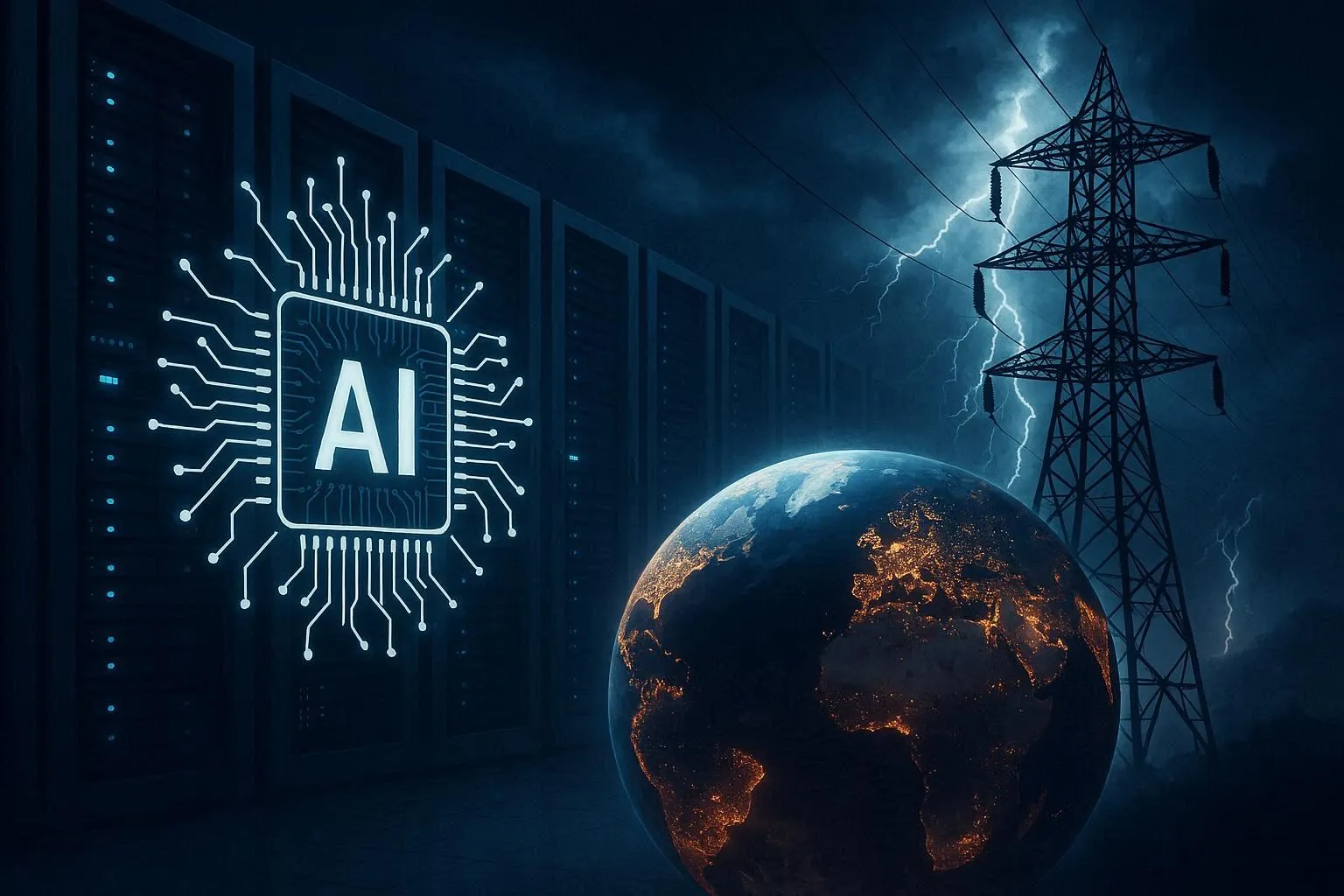
AI Data Centers and the Coming Global Electricity Crisis
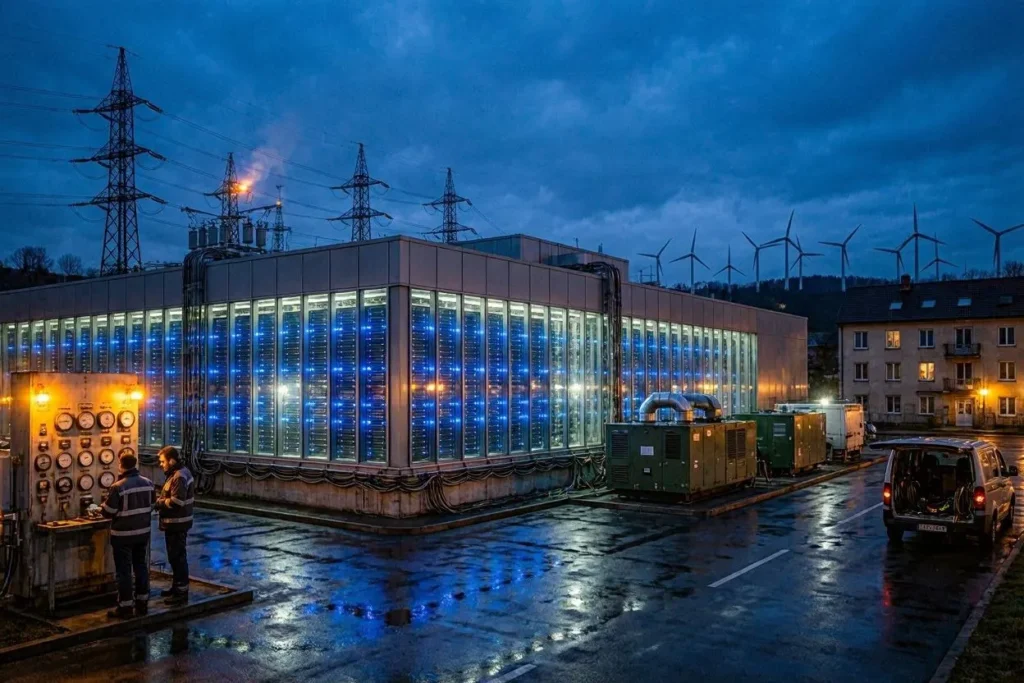
How Artificial Intelligence Could Reshape the World’s Energy Future
Introduction
AI Data Centers and the Coming Global Electricity Crisis may become one of the defining challenges of the 21st century. As artificial intelligence expands across industries, the electricity required to power AI infrastructure is growing at an unprecedented rate.
Artificial intelligence is rapidly becoming the defining technology of the 21st century. From advanced chatbots and autonomous systems to scientific research and military applications, AI is transforming industries at an unprecedented pace. Yet beneath the excitement surrounding AI lies a growing challenge that receives far less attention: electricity.
Every AI model requires enormous computing power. Behind every AI-generated image, recommendation, search result, or automated decision sits a vast network of data centers consuming massive amounts of energy. As governments and technology companies race to dominate the AI revolution, global electricity demand is beginning to surge.
The world may be entering an era where energy security becomes inseparable from AI competitiveness. Nations that fail to expand power generation and grid infrastructure could find themselves falling behind in the next technological revolution.
The question is no longer whether AI will transform the global economy. The real question is whether the world’s electrical systems can keep up.
The Hidden Infrastructure Behind AI
Most people interact with AI through applications and devices. However, the true engine of artificial intelligence lies inside gigantic data centers packed with thousands of specialized processors.
Training advanced AI models requires:
- High-performance GPUs
- Massive cloud computing infrastructure
- Continuous cooling systems
- High-speed networking equipment
- Reliable electricity supplies operating 24/7
Unlike traditional software applications, modern AI systems consume significantly more computational resources.
A single large AI training run can require weeks or months of continuous operation across thousands of processors. Once deployed, AI models continue consuming electricity every time users submit queries, generate content, or perform calculations.
As AI adoption expands globally, energy demand is rising alongside it.
Why AI Uses So Much Electricity
The growing energy appetite of AI stems from three primary factors.
1. Training Large Models
Modern foundation models contain hundreds of billions or even trillions of parameters.
Training these systems requires processing vast datasets and performing quadrillions of mathematical operations.
The larger the model, the greater the computational burden.
2. AI Inference at Scale
Training receives most headlines, but inference—the process of responding to user requests—can consume even more energy over time.
Millions of users interacting with AI systems every day create a constant demand for computing resources.
3. Cooling Requirements
AI chips generate substantial heat.
To prevent equipment failure, data centers rely on advanced cooling technologies, including:
- Liquid cooling systems
- Industrial chillers
- Evaporative cooling technologies
- High-capacity ventilation networks
Cooling alone can account for a significant portion of a facility’s total electricity consumption.
The AI Arms Race Is Becoming an Energy Race
The global competition for AI leadership increasingly resembles a competition for electrical power.
Major technology companies are investing hundreds of billions of dollars in AI infrastructure.
Leading firms including:
- Microsoft
- Amazon
- Meta
- OpenAI
are building increasingly large data center networks.
At the same time, governments view AI as a strategic national capability with implications for economic growth, military power, cybersecurity, and technological sovereignty.
Countries capable of supplying abundant and reliable electricity may gain a significant competitive advantage in the AI era.
Data Centers Could Become One of the Largest Sources of New Electricity Demand
According to projections from organizations including the International Energy Agency, data center electricity consumption is expected to rise dramatically during the coming decade.
Several factors are driving this increase:
- Explosive AI adoption
- Expansion of cloud computing
- Digitalization of industries
- Growth of machine learning workloads
- Rising demand for high-performance computing
In some regions, utilities are already reporting concerns about future grid capacity.
Electricity demand that once grew gradually is now accelerating due to AI infrastructure expansion.
The Return of Energy Geopolitics
For decades, oil and natural gas shaped international relations.
The AI era may create a new form of energy geopolitics centered on electricity generation.
Nations rich in energy resources could become attractive destinations for AI infrastructure investment.
Countries with:
- Low-cost electricity
- Stable power grids
- Advanced transmission networks
- Reliable regulatory environments
may emerge as global AI hubs.
This trend is already influencing investment decisions across North America, Europe, the Middle East, and Asia.
The relationship between energy security and technological leadership is becoming increasingly intertwined.
Can Renewable Energy Meet AI’s Growing Demand?
Renewable energy remains central to long-term electricity expansion.
Solar and wind power have become increasingly cost-competitive and are being deployed at record levels globally.
Advantages include:
- Lower carbon emissions
- Reduced fuel dependency
- Scalability
- Falling technology costs
However, renewables face challenges when supporting AI infrastructure.
Data centers require:
- Continuous power availability
- High reliability
- Stable grid frequency
- Backup generation capacity
Because solar and wind production varies with weather conditions, additional storage and grid investments are often necessary.
As a result, many regions are pursuing a mix of renewable energy, battery storage, natural gas, and nuclear power.
Nuclear Energy’s Unexpected Comeback
One of the most surprising developments in the AI era is renewed interest in nuclear energy.
Nuclear power offers several advantages:
- High reliability
- Zero direct carbon emissions during operation
- Continuous electricity generation
- Large-scale output
Technology companies increasingly recognize that AI infrastructure requires dependable baseload power.
Several governments are also exploring small modular reactors (SMRs) as a potential solution for future energy needs.
Nuclear energy, once viewed as a declining industry in some regions, is becoming part of discussions surrounding AI competitiveness and energy security.
Internal Link Opportunity:
Read our analysis on The Global Nuclear Renaissance and the Future of Energy Security.
Could AI Trigger a Global Electricity Shortage?
A worldwide electricity shortage is not inevitable, but localized crises are possible.
Potential risks include:
Grid Congestion
Existing electrical infrastructure may struggle to accommodate sudden increases in demand.
Rising Electricity Prices
Greater demand could place upward pressure on energy costs for households and businesses.
Delayed Infrastructure Development
Building new power plants and transmission networks often takes years.
Energy Security Concerns
Countries dependent on imported energy may face additional vulnerabilities.
Without proactive investment, AI-driven demand growth could expose weaknesses in existing energy systems.
The Economic Impact of an Electricity Crunch
Electricity is the foundation of modern economies.
If power becomes constrained, several consequences could emerge:
Higher Business Costs
Industries reliant on electricity-intensive operations may face increased expenses.
Inflationary Pressures
Rising energy costs often spread throughout supply chains.
Reduced Economic Competitiveness
Regions with expensive or unreliable electricity may struggle to attract investment.
Slower AI Development
Limited power availability could become a bottleneck for technological progress.
The future of economic growth may increasingly depend on energy infrastructure rather than software innovation alone.
Which Countries Are Best Positioned?
Several nations possess characteristics that could make them major beneficiaries of the AI-energy transition.
United States
Strong technology ecosystem combined with significant energy resources.
China
Massive infrastructure investments and ambitious AI development programs.
Canada
Abundant hydroelectric resources and relatively low-carbon electricity generation.
Norway
Extensive renewable energy capacity and stable power supplies.
United Arab Emirates
Large-scale energy investments and growing ambitions in artificial intelligence.
These countries demonstrate how energy availability may become a strategic advantage in the digital economy.
The Future: AI and Energy Becoming One Industry
Historically, technology and energy were viewed as separate sectors.
That distinction is beginning to disappear.
Future AI development will increasingly depend on:
- Power generation
- Grid modernization
- Energy storage
- Transmission infrastructure
- Advanced cooling technologies
The next decade could witness unprecedented investment in both computing infrastructure and electricity systems.
Companies that once focused solely on software may become major energy investors.
Likewise, energy companies may emerge as critical players in the AI economy.
Conclusion
Artificial intelligence promises extraordinary advances in productivity, innovation, healthcare, science, and economic growth. Yet every AI breakthrough depends on something surprisingly simple: electricity.
The global AI boom is creating a surge in power demand that could reshape energy markets, influence geopolitics, and redefine national competitiveness.
The countries that successfully expand electricity generation, modernize grids, and secure reliable energy supplies may become the dominant powers of the AI era.
The coming global electricity challenge is not merely an energy story. It is a technology story, an economic story, and increasingly, a geopolitical story.
In the race for artificial intelligence, the ultimate resource may not be data, talent, or capital.
It may be power.
References
- International Energy Agency (IEA) – https://www.iea.org
- U.S. Energy Information Administration (EIA) – https://www.eia.gov
- International Renewable Energy Agency (IRENA) – https://www.irena.org
- World Bank Energy Data – https://www.worldbank.org
- International Atomic Energy Agency (IAEA) – https://www.iaea.org


PDF Reader : PDF Viewer app on play store :
https://play.google.com/store/apps/details?id=com.smk7.pdfreader