The Future of Food Security: Can the World Feed 10 Billion People?
Introduction
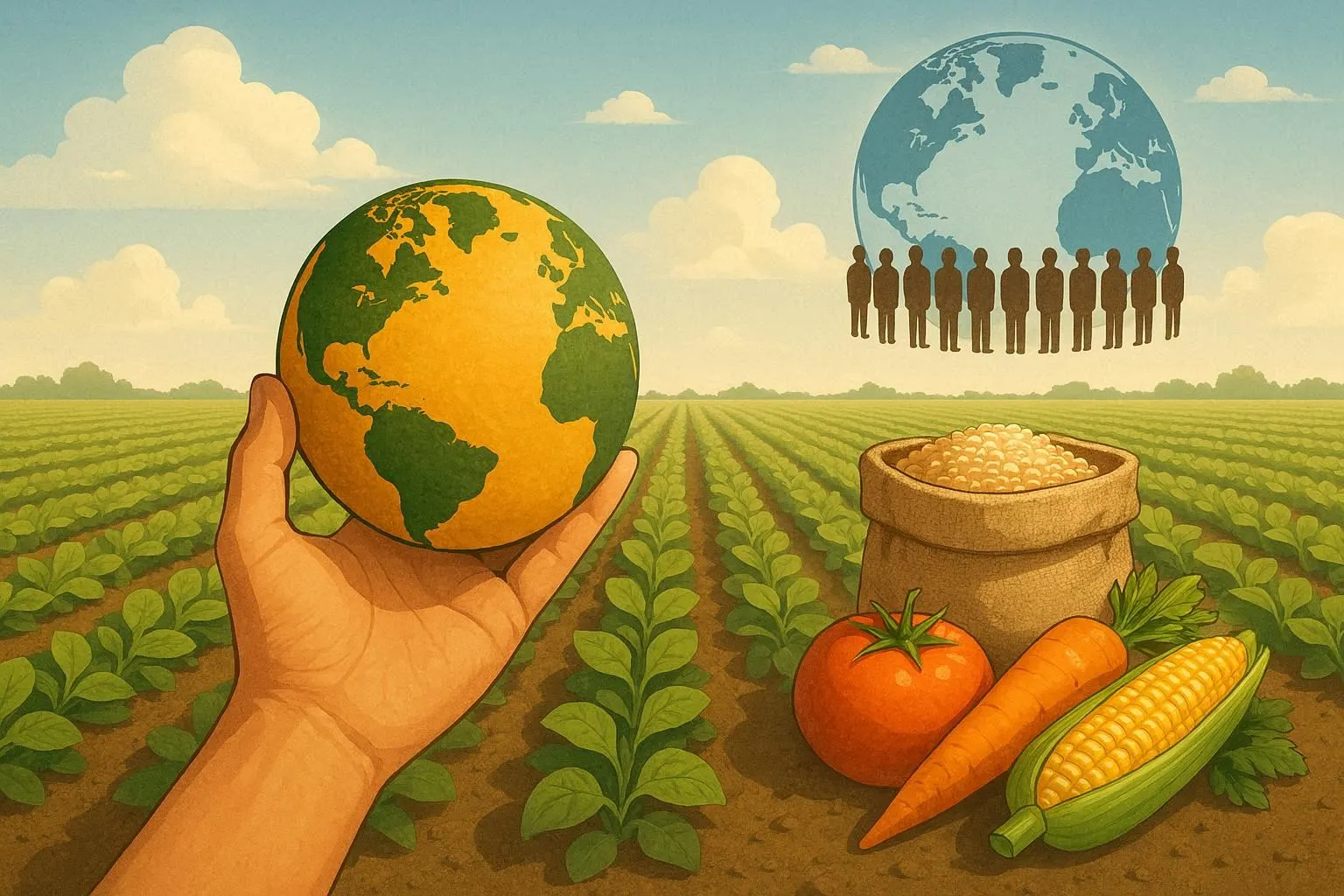
The future of food security is emerging as one of the defining challenges of the 21st century. As the global population moves toward 10 billion people, the pressure on agricultural systems, water resources, and food supply chains continues to grow. According to United Nations projections, humanity could reach this historic demographic milestone by the middle of the century. While population growth brings economic opportunities and technological advancement, it also raises one of the most important questions of our time:
Can humanity produce enough food to feed nearly 10 billion people without destroying the planet?
Food security is no longer just an agricultural issue. It has become a geopolitical, economic, environmental, and technological challenge. Governments are increasingly concerned about food shortages, supply chain disruptions, climate change, water scarcity, and rising food prices. At the same time, technological innovations are transforming the way food is produced, distributed, and consumed.
The future of food security will shape global stability, economic growth, and international relations for decades to come.
Understanding Food Security
The United Nations defines food security as a condition in which all people have access to sufficient, safe, and nutritious food at all times.
Food security depends on four key pillars:
- Availability of food
- Access to food
- Proper utilization and nutrition
- Stability of supply
A country can produce large quantities of food yet still face food insecurity if economic inequality, conflict, or poor infrastructure prevent people from accessing it.
This reality explains why hundreds of millions of people remain undernourished despite global food production being higher than at any point in human history.
The Population Challenge
The global population surpassed eight billion people in 2022 and continues to grow, particularly in parts of Africa and Asia.
By 2050:
- Global food demand could rise by 50% or more.
- Demand for meat and dairy products is expected to increase significantly.
- Urbanization will reduce available farmland in many regions.
- Rising incomes will change consumption patterns.
The challenge is not simply producing more food but producing it sustainably while preserving natural resources.
Climate Change: Agriculture’s Biggest Threat
Climate change is rapidly emerging as one of the greatest threats to food security.
Extreme weather events are becoming more frequent:
- Severe droughts
- Floods
- Heatwaves
- Unpredictable rainfall patterns
- Stronger storms
These events reduce crop yields and increase food price volatility.
For example, prolonged droughts have affected wheat production across several major agricultural regions, while floods have damaged rice production in parts of Asia.
Climate scientists warn that some traditional farming areas could become less productive as temperatures continue to rise.
Without adaptation measures, climate change could significantly reduce global agricultural output in the coming decades.
Water Scarcity and the Food Crisis
Agriculture accounts for approximately 70% of global freshwater use.
Many regions already face severe water stress:
- The Middle East
- North Africa
- Parts of India
- Central Asia
- Western United States
Groundwater reserves are being depleted faster than they can be replenished.
As water becomes scarcer, competition between agriculture, industry, and urban populations will intensify.
Future food security may depend heavily on innovations such as:
- Precision irrigation
- Water recycling systems
- Drought-resistant crops
- Desalination technologies
Countries that secure sustainable water supplies may gain significant strategic advantages.
The Geopolitics of Food
Food has become a powerful geopolitical tool.
Major agricultural exporters influence global markets through their production and export capacity.
Key food-exporting nations include:
- United States
- Brazil
- Canada
- Australia
- Russia
- Ukraine
The Russia-Ukraine conflict demonstrated how disruptions in grain exports can trigger global food price spikes and threaten food security in vulnerable countries.
Many nations are now reconsidering their dependence on imported food.
Governments are increasingly investing in:
- Domestic food production
- Strategic grain reserves
- Agricultural technology
- Supply chain resilience
Food security is becoming an important component of national security policy.
How Technology Could Transform Food Production
Technology offers perhaps the most promising path toward feeding a growing global population.
Precision Agriculture
Modern farms increasingly use:
- Artificial intelligence
- GPS-guided machinery
- Sensors
- Satellite monitoring
- Data analytics
These technologies allow farmers to optimize fertilizer use, irrigation, and planting schedules while reducing waste.
Vertical Farming
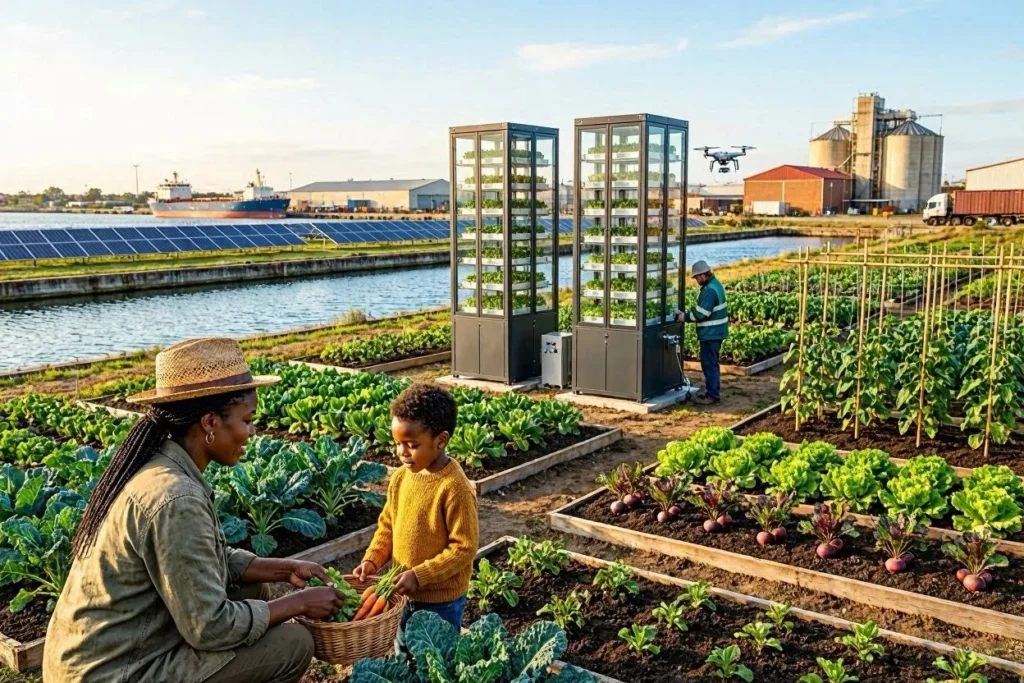
Vertical farming grows crops indoors using stacked layers and controlled environments.
Benefits include:
- Reduced land use
- Lower water consumption
- Year-round production
- Reduced transportation costs
Although currently expensive, vertical farming could become a major source of urban food production.
Gene Editing and Advanced Crop Science
New techniques such as CRISPR gene editing may help create crops that are:
- More drought-resistant
- More nutritious
- More disease-resistant
- Better adapted to changing climates
Advances in biotechnology could significantly increase agricultural productivity.
Agricultural Robotics
Robots are increasingly being developed to:
- Plant crops
- Remove weeds
- Harvest produce
- Monitor crop health
Automation may help address labor shortages while improving efficiency.
The Growing Role of Alternative Proteins
Traditional livestock production requires enormous amounts of land, water, and feed.
Alternative protein technologies are attracting billions of dollars in investment.
Emerging solutions include:
- Plant-based meat
- Cultivated meat
- Precision fermentation
- Insect protein
Supporters argue these technologies could reduce environmental impacts while meeting growing protein demand.
Whether consumers embrace these alternatives on a large scale remains an open question.
Reducing Food Waste: The Hidden Solution
One of the most overlooked aspects of food security is waste.
Roughly one-third of all food produced globally is lost or wasted.
Food is lost during:
- Harvesting
- Transportation
- Storage
- Retail distribution
- Household consumption
Reducing food waste could dramatically increase food availability without requiring additional farmland.
Investments in cold storage, transportation infrastructure, and digital supply chain management could play a major role in solving this problem.
Can the World Feed 10 Billion People?
The answer is surprisingly optimistic.
Most experts agree that the world possesses the scientific knowledge, technological capabilities, and agricultural resources necessary to feed nearly 10 billion people.
The real challenge lies in:
- Distribution
- Infrastructure
- Political stability
- Climate adaptation
- Resource management
Humanity does not face a simple food production problem. It faces a food system problem.
Future success will depend on how effectively governments, businesses, researchers, and farmers work together to modernize agriculture while protecting ecosystems.
Conclusion
The future of food security will be one of the defining issues of the 21st century.
Population growth, climate change, water scarcity, and geopolitical tensions are creating unprecedented challenges for global agriculture. Yet advances in artificial intelligence, biotechnology, precision farming, and alternative proteins offer reasons for optimism.
The question is no longer whether humanity can produce enough food. The more important question is whether the world can build a resilient, sustainable, and equitable food system capable of feeding everyone.
The nations that lead the next agricultural revolution may ultimately gain not only economic advantages but also strategic influence in an increasingly competitive world.
As the global population moves toward 10 billion people, food security will become one of the most important measures of national strength, technological innovation, and international cooperation.